
What John Wick Got Right
That Most Action Stories Get Wrong

Dear Gentle Reader,
Before I get started, welcome to all my new subscribers. Your support helps more than you even realize. And if you’ve been here since the beginning, from the bottom of my heart, THANK YOU. Now, let’s get on with it.
I have a confession.
The first time I watched John Wick, I wasn’t watching it the way most people do. I wasn’t just enjoying the action. I was studying it. Because somewhere in the first twenty minutes, before the nightclub, before the catacombs, before any of the genuinely insane choreography that made that film a landmark, I realized I was watching something that understood storytelling at a fundamental level that most action movies never even attempt.
And I couldn’t figure out why it worked so well. Not at first.
So I watched it again. And then I started asking myself: what is it that this movie figured out that so many others miss? Because John Wick is not, and I want to be very clear about this, a great movie because of the action. The action is extrardinary. But it’s not the reason the film actually works.
The reason John Wick works is the same reason any great story works: you simply care. You actually, genuinely care what happens.
The Dog. The Car. The Wife.
Let me set the scene for you. Spoiler alert, but if you haven't seen it, stop reading right now and go and do yourself a favor and watch it asap. You’ll thank me in the morning.
John Wick’s wife has just died from an illness. She loved him. He loved her. And before she passed, she arranged for a puppy to be delivered to him after her death so he wouldn’t be alone. So he’d have something to love when she was gone. Something for him to help him grieve.
Then a gangster’s son breaks into his house, beats him up, steals his vintage car, and kills the cute little dog.
That’s it. That’s the whole inciting incident. A dead dog and a stolen car.
And yet you demand blood. You want John Wick to find every single person involved and dismantle them. Not because the movie told you to feel that way. Because you felt it and the film earned it.
Most action stories give you a reason to WATCH the hero. John Wick gives you a reason to FEEL the hero.
This is the thing thing that separates great action storytelling from generic action storytelling, and it’s something I think about constantly in my own work. Spectacle is easy to manufacture. Emotional stakes are not. You cannot fake them. You cannot shortcut them, and the audience knows the difference immediately, even if they can’t articulate why.
The inciting incident in John Wick is almost absurdly small compared to what follows. It’s a dog. But the writers understood something crucial: the size of the inciting incident doesn’t determine the emotional weight. The conection you’ve built with the character before that moment does.
If you don’t know why John loved that dog, you don’t care that it’s dead. It’s as simple as that. But you do know. And you do care. That’s craft.
World-Building That Serves the Story
Here’s another interesting thing John Wick gets right that most action stories fumble: the world exists for the character, and not the other way around. Let me repeat that: the world exists for the character, and not the other way around.
The Continental Hotel. The gold coin economy. The High Table. The network of assassins operating in plain sight inside ordinary society. This is genuinely inventive, immersive world-building. It's the special sauce, the kind that ivites sequels and expands into mythology. And yet none of it slows the story down. None of it feels like homework or a chore. You’re not sitting through an exposition dump while the movie explains its own rules to you.
You discover the world the same way John Wick moves through it: with familiarity and confidence. Like an onion, layer by layer. He knows this world. And so, somehow, you feel like you know it too, almost right away.
This is something I’ve been wrestling with in the Underworld Universe. We have a shared world with four ongoing series across four different genres, tones, and protagonists, all existing within the same mythology. The temptation is always to over-explain. To set the table so carefully and so thoroughly that by the time the meal arrives, the reader is already full, John Wick taught me that trust is a form of world-building.
Trust your reader to follow. Trust the texture of the world to communicate itself. Drop them in. Let them swim.
The best world-building is atmospheric, not instructional. It’s the difference between feeling like you’ve arrived somewhere real versus feeling like you’ve been handed a travel brochure. Maybe one of these days I’ll expand on this with one of my earlier series: Battlecats: Heroes of Valderia, which is probably a master class in what first-time writers should never attempt on their first try. I worked it out in the end, but by the grace of God. :)
Check out the insanity of the sheer volume of this thing: BATTLECATS
Economy of Language. Economy of Violence.
John Wick barely speaks. This is not an accident.
There’s a version of this character, and you’ve seen this version in a hundred other movies, who explains himself constantly. Who monologues. Who processes his grief out loud so the audience can follow along. The internal life is externalized because the filmmakers don’t trust the visuals, or don’t trust the audience, to carry the weight. This right here is particularly crucial in comics.
John Wick trusts both. Keanu Reeves plays this character with extraordinary restraint, and the film is written to support that restraint. His emotional life is expressed entirely through action, through what he does, what he refuses to do, what it costs him to do it. And because of that, every single moment when he does speak carries tremendous weight.
Economy in storytelling is one of the hardest things to achieve and one of the most rewarding when you get it right. In comics, we live and die by economy. You have twenty pages. Sometimes twenty-two or twenty-four. More than that is rare in today’s “comics publishing economy”. You have a fixed number of panels. Every word, every image, every silent beat has to earn its place or it’s gone.
What John Wick reminded me is that economy isn’t about minimalism for its own freakin’ sake. It’s about signal-to-noise ratio. Every element of a story should be doing at least one job, ideally two or three. When something is only there to fill space, whether is aa line of dialogue that doesn’t reveal character, a scene that doesn’t advance plot or deepen theme, it makes everything around it weaker.
The violence in John Wick is extraordinary, 100%. But it’s also purposeful. Every fight sequence has a dramatic function. It reveals something about John, what he’s capable of, his desperation, and even his grief transformed into precision. The choreography is not decorative. It’s character.
What This Means for Me — and Maybe for You
I’ve been in comics for over a decade. I’ve written across genres: action, horror, mythology, detective noir, supernatural thriller. And one of the things I’ve come to believe deeply is that genre is almost irrelevant at the level where stories actually work or fail.
John Wick is an action movie. But the principles that make it an extraordinary emotional investment before spectacle, world-building through texure rather than exposition, economy of character expression, and violence that means something are not action movie principles. They’re storytelling principles. They work in horror. They work in romance. They work in literary fiction and pulp comics and pretige television, wrestling, soap operas, and everything in between.
When I’m working on something like Honor and Curse: Eternal, which is operatic, mythological, high-stakes supernatural action, I’m asking the same questions the John Wick writers asked. Why should you care about this person? What does it cost them to do what they do? How do we build a world that feels real without stopping to explain itself? How do we make the action mean something?
These are not easy questions, I know. No one has a formula answer. But asking them is the difference between a story that people remember and a story that people finish.
Genre is almost irrelevant at the level where stories actually work or fail.
I’ll be returning to this conversation in future posts/newsletters: looking at other films, books, and stories that cracked a particular code, and trying to articulate what I’ve borrowed from them. Because the best education I ever got as a writer wasn’t in any classroom, or on YouTube, or even from Robert McKee and his three-day seminar (yeah, I even took that one in Colombia when I was starting Mad Cave Studios). It was in paying attention to the things that made me feel something, and then asking: how did they do that? ” Reverse engineering comes a long way. Also, shout-out to my mentor, since he’s been instrumental in helping me polish my understanding of storytelling, writing, pacing, and the works. From the bottom of my heart: Thanks, Sir!
John Wick made me feel something. I’m still trying to figure out exactly how they did it. And I suspect that’s exactly how it should be.
✦ BONUS: FROM THE CREATOR’S DESK ✦
Hunt. Kill. Repeat. — And Why I’ll Always Love This Genre
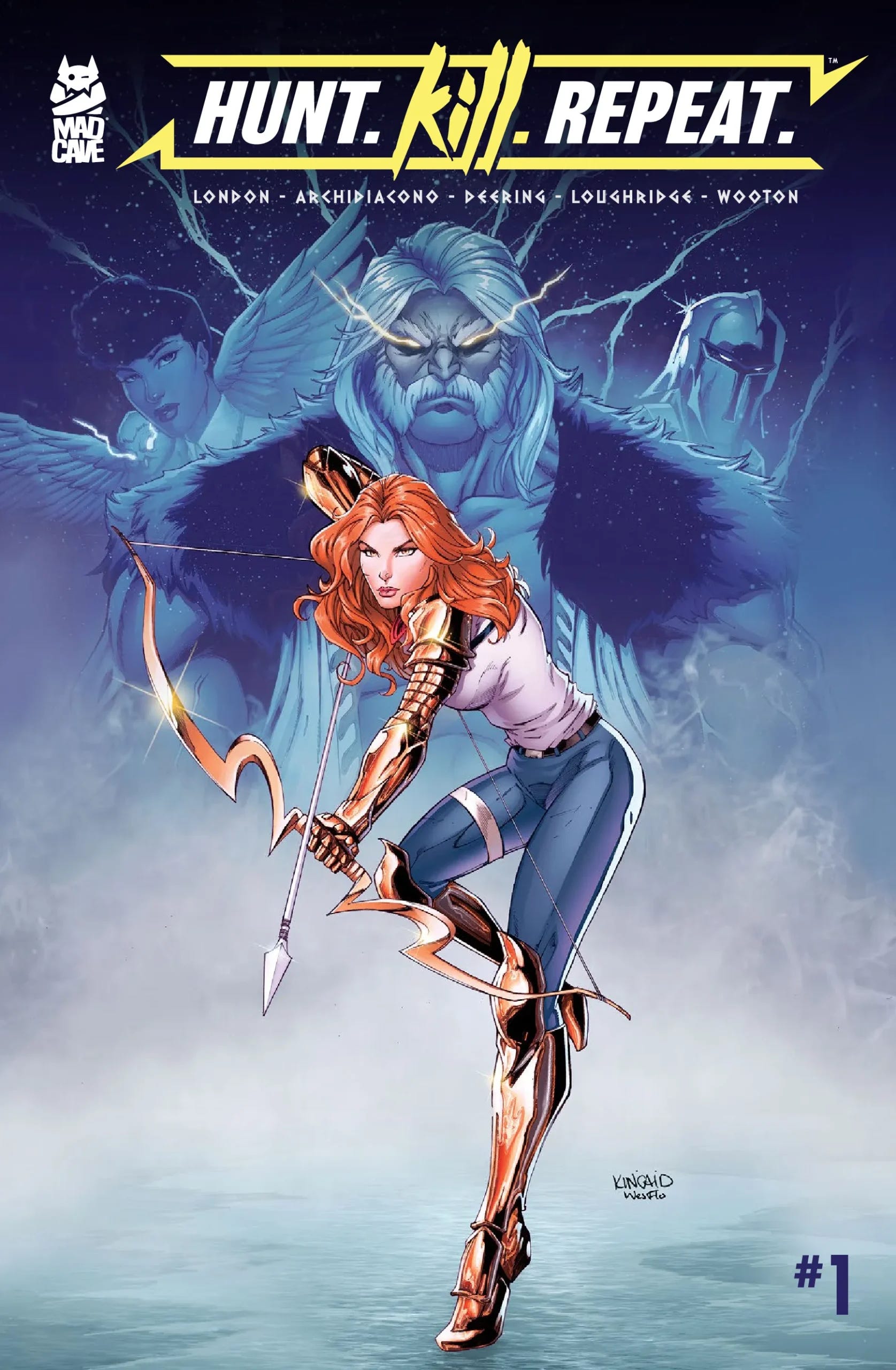
Everything I just wrote about John Wick? I was living it when I was making Hunt. Kill. Repeat.
I just didn’t know how to articulate it yet.
Hunt. Kill. Repeat was published by Mad Cave in 2023. Six issues. A complete story. Artemis, the goddess of the hunt, stripped of her divine powers by Zeus, left for dead, rebuilt over ten years of exile and hunting her way back to Modern Olympus for revenge against her own father. Think, Kill Bill/John Wick meets Clash of the Titans. That was the elevator pitch. And I meant every word of it.
But here’s what I didn’t say in the pitch, what I don’t think I could have said at the time: that series was really about what happens when the most powerful person in the room loses everything that made her feel like herself. It was about grief wearing armor. It was about a woman who was told that loving a mortal was weakness, and who decided that weakness was worth dying for.
I wrote it because I am obsessed with this specific type of story. The revenge odyssey. The protagonist stripped down to nothing, forced to rebuild, fighting their way back not just to power but to meaning. John Wick does it. Kill Bill does it. Gladiator does it. The Count of Monte Cristo does it. Every culture across history has some version of this story because it speaks to something so fundamental in the human experience that it doesn’t need a translation.
Revenge stories, at their best, are not really about revenge. They’re about someone trying to recover who they were before the world broke them.
What drew me to Greek mythology specifically was the scale. When your antagonist is Zeus, the big boss, the king of the gods, father of the protagonist, the most powerful being in existence, the stakes are already as high as they get. There’s nowhere to hide. And I loved that. I loved that Artemis couldn’t call for backup, couldn’t appeal to some higher authority, couldn’t negotiate or compromise her way out of it. She had to hunt, kill, and repeat. Until she got to him.
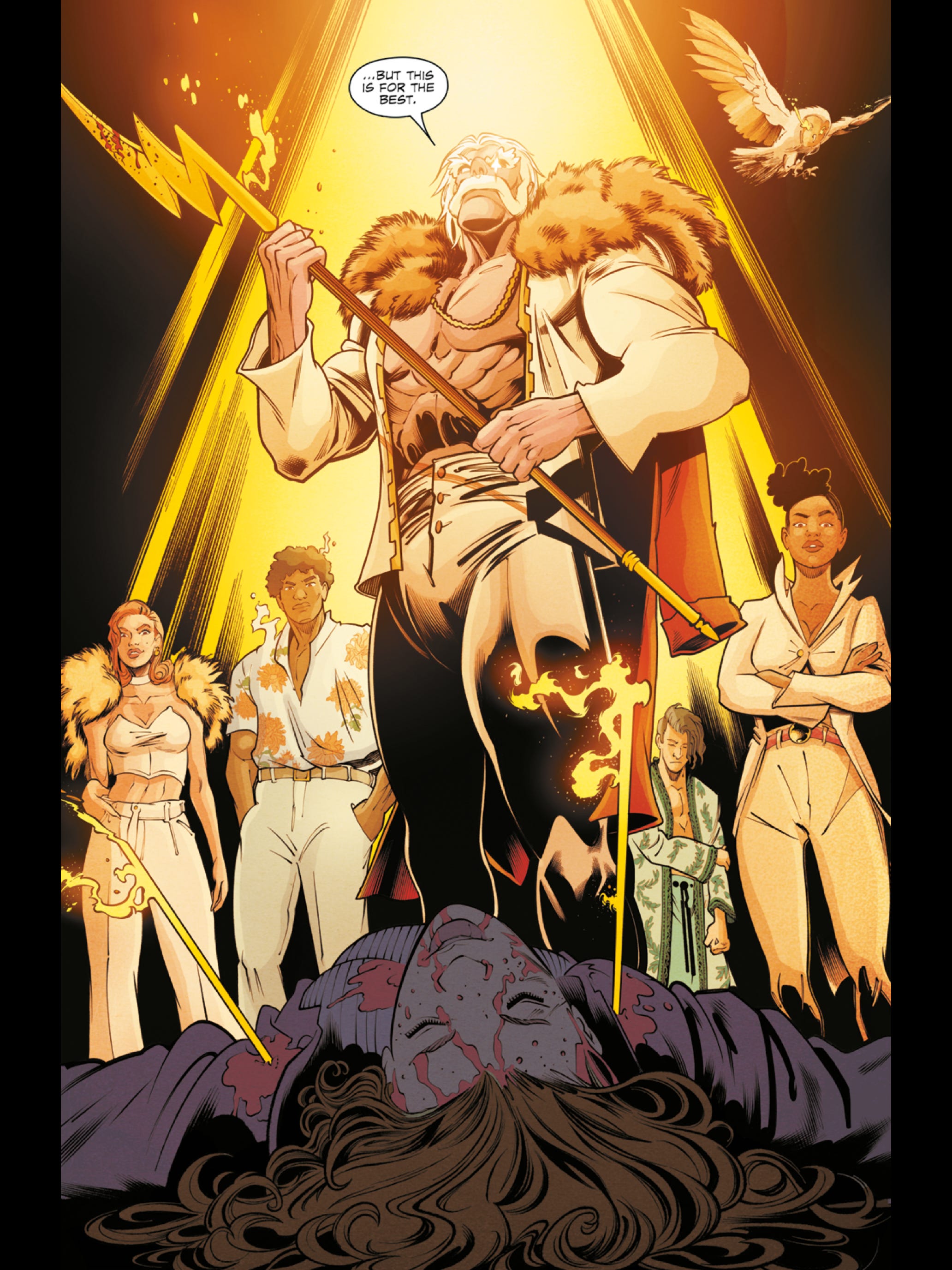
The creative team we assembled for that book was extraordinary. Francesco Archidiacono on art brought a kinetic ferocity to the action sequences that still impresses me, the kind of page layouts that make you feel the impact before your brain processes what’s happening. Lee Loughridge on colors gave the whole series a palette that shifted between the cold blues of the mortal world and the burning golds of Olympus in ways that did storytelling work all on their own. Ryan Kincaid’s covers were iconic. And Rus Wooton lettered the whole thing with the precision and craft he brings to everything.
I was proud of that book then. I’m still proud of it now.
What the Critics Said — and What I Actually Heard
The reception genuinely surprised me. Not because I didn’t believe in the work, I did, but because you never know which books find their audience and which ones slip through the cracks. Hunt. Kill. Repeat. found its audience.
9.0
Average critic score across all 6 issues
One reviewer said something that stuck with me: they admitted going in that Greek gods generally bore them. And yet London, they wrote, had entwined influences like John Wick and Kill Bill into something that felt like a genuine Greek tragedy. That meant more to me than any score. Because that’s exactly what I was trying to do. To use the familiar architecture of mythology to tell something that felt alive, current, and emotionally real.
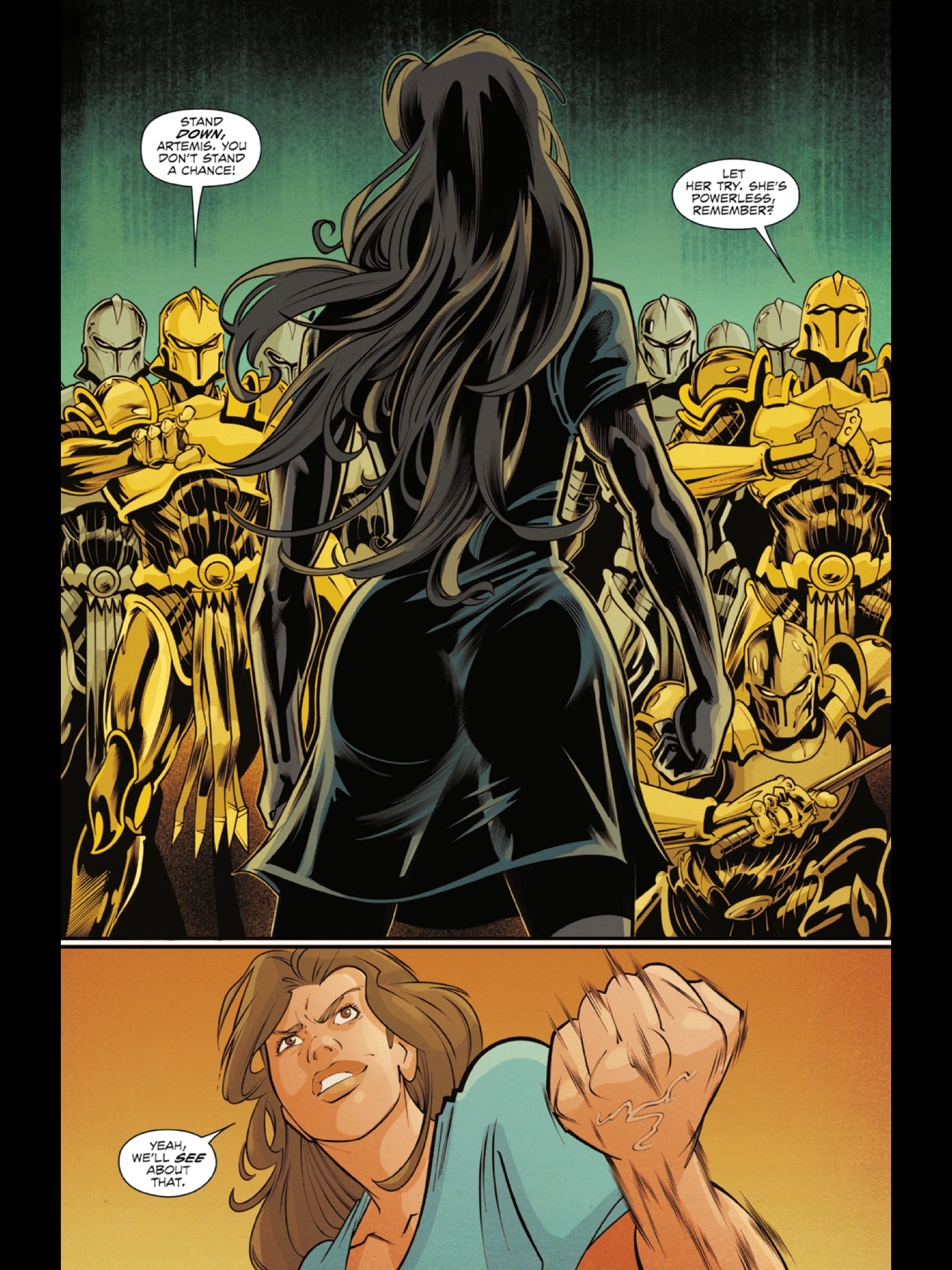
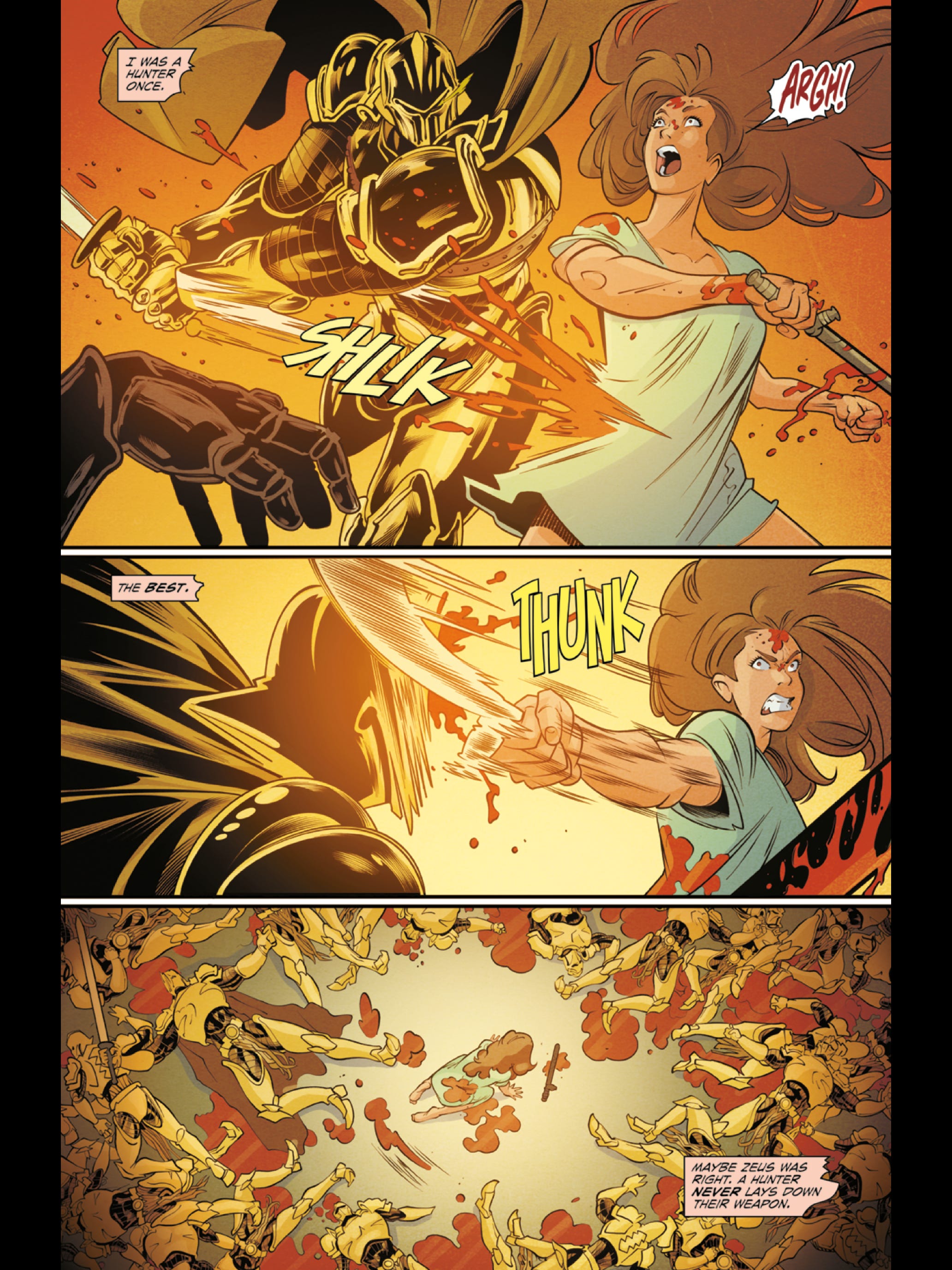
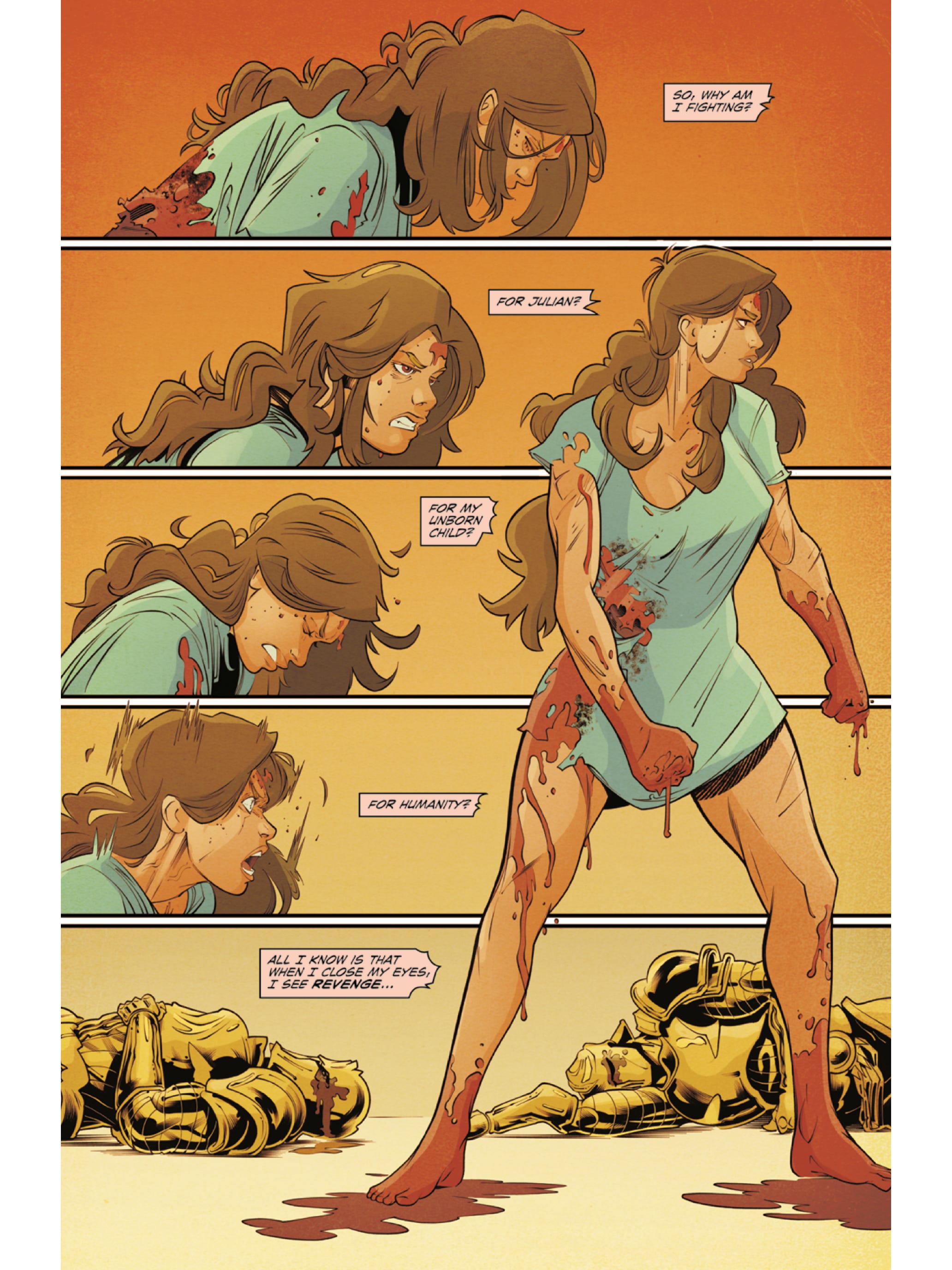
Another called it a standout book that effortlessly blended classic mythology in a new and exciting way that was both action-packed and deeply character driven. That word: effortlessly, is funny to me. Nothing about it was effortless. But when the work is right, it shouldn’t show the effort. That’s the job. Period.
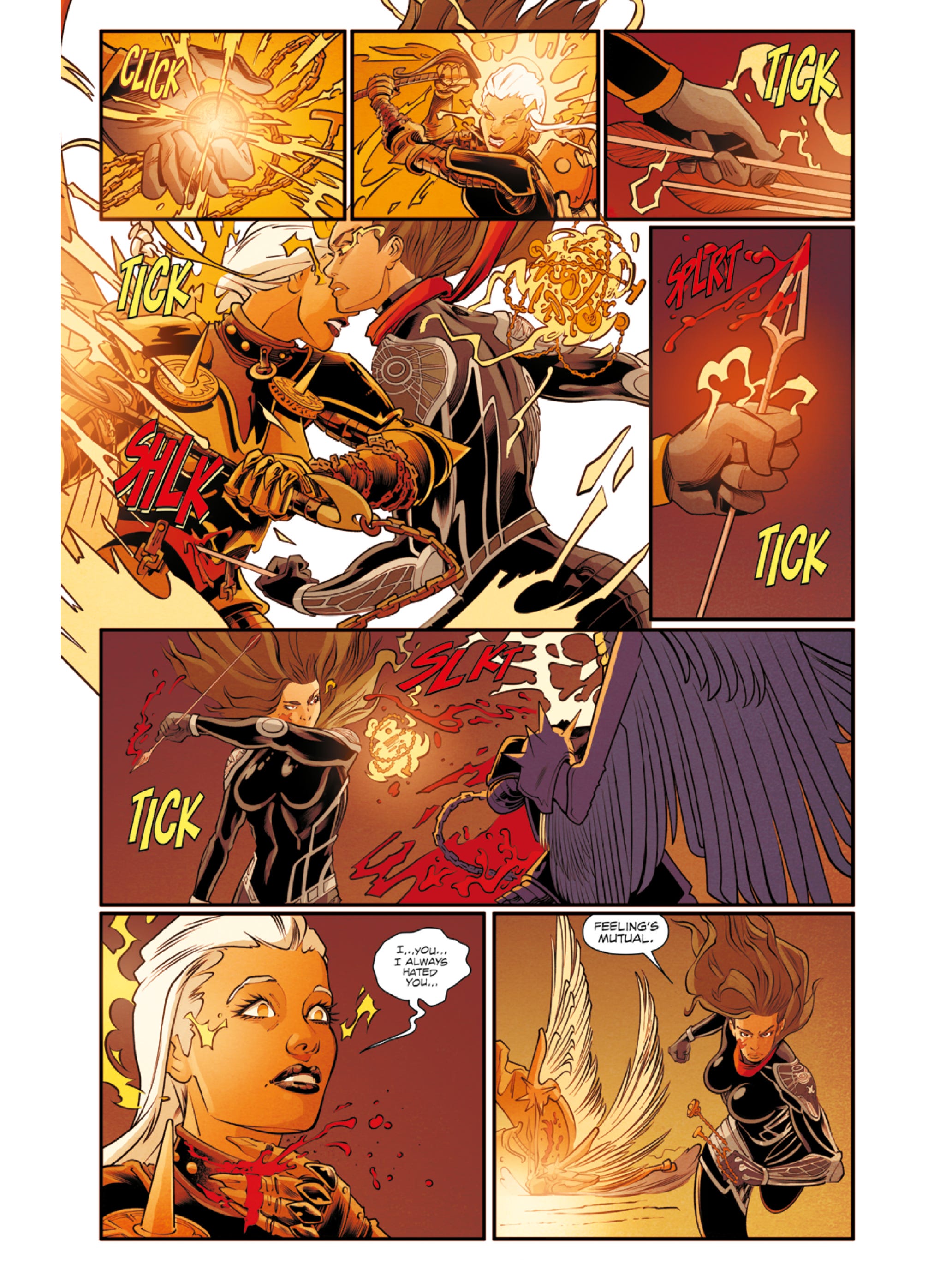
By issue #5, critics were scoring individual issues at 9.8 out of 10. By the time the trade paperback came out in December 2023, the collected series was holding a 9.0. I don’t chase scores. But I’d be lying if I said those numbers didn’t tell me something important: the gamble on this specific genre, this specific story, this specific character, well, it paid off for my journey as a creator and a writer.
Why I Keep Coming Back to This Genre
People ask me sometimes why I write across so many different genres. Horror with Terrorbytes. Mythology and action with Hunt. Kill. Repeat. Supernatural noir and detective fiction and John Wick-style operatic violence all living inside the Underworld Universe simultaneously.
The honest answer is: I don’t think of them as different genres. I think of them as different costumes on the same fundamental story questions. WHO is this person? WHAT did they lose? WHAT are they willing to do to get it back? WHAT does it cost them?
Artemis asks those questions. So does John Wick. So does every protagonist worth following through a story.
The revenge odyssey genre, if you allow me to call it that, is one I keep returning to because it creates the conditions for the kind of character work I find most fascinating. You have to strip the character down. You have to take everything away. And then you have to watch what’s left. What they rebuild themselves into. Whether what they become is worth what they sacrificed to get there.
Those questions don’t have genre boundaries. They’re just the questions that good stories ask.
Hunt. Kill. Repeat. asked them in a world of Greek gods and divine politics and a woman with a bow who refused to stay dead. And I loved every page of it. I still do.
If you haven’t read it, it’s collected in a single trade paperback, available at madcavestudios.com and wherever great comics are sold. Six issues. A complete story. No cliffhanger. Just Artemis, her gods, and a ten-year debt she came to collect.
No Gods. No Masters. Only Revenge.
Check out the series: HUNT. KILL.REPEAT
Until next time,
Mark London
Founder & Chief Creative Officer
— — —
The Underworld Universe Phase 2 begins with Honor and Curse: Eternal, available on March 25 — ask your local comic shop and wherever comics are sold.
Hunt. Kill. Repeat. Vol. 1 — Available Now at madcavestudios.com
Battlecats — Available Now at madcavestudios.com
I’ll take a slow burn over an exposition dump any day! Thanks for another solid newsletter, Mark!
It's funny, because I think there is a Mark Walhberg movie called Shooter which revolves around him avenging his dog, but that movie doesn't work nearly as well as John Wick. Kind of makes me want to re-watch them both back to back and see what's what. Thanks for the write up and Hunk-Kill-Repeat looks like a bloody good time.